(Mild Spoilers. I have tried to steer away from politics but with a film like Dhurandhar, you can only do that a limited amount)
Going into Dhurandhar 2 (or Dhurandhar: The Revenge as it is officially called), the comparison that came to mind was Gangs of Wasseypur, with both film franchises shooting both parts simultaneously and featuring gang wars for the soul of a troubled region. My belief was also strengthened by the sheer quality of the first Dhurandhar, which rivaled that of the first GoW. Watching Dhurandhar 2 though, for finding out the real inspiration in terms of structure and feel, I realised we have to go earlier in time, to a common source for both franchises. For Dhurandhar 2 clearly follows in the footsteps of The Godfather Part II.
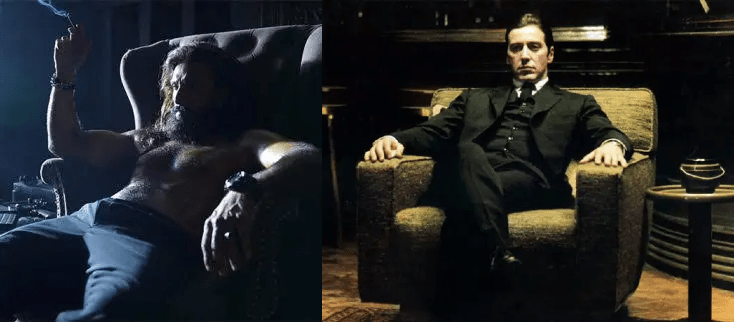
The Godfather Part II‘s ingenious structure sees it act as both a prequel and sequel to the original film, with Vito’s story paralleling but also contrasting Micheal’s moral downfall. Dhurandhar 2 too starts out with a flash to the past and we are introduced to the man Hamza was before he became Hamza. Although The Godfather Part II followed a son and father, and Dhurandhar 2 follows the same person, writer-director Aditya Dhar keeps reinforcing the idea that Jaskirat Singh Rangi and Hamza Ali Mazari are two different people contained inside the same person. Both Vito and Jaskirat’s actions are generally presented as more justified, though because of Dhurandhar‘s political affiliations, it can’t follow through on Hamza’s downfall like Micheal’s. Though it would be naive to demand as much introspection as the Francis Ford Coppola film in Dhurandhar, a bit more doubt, a bit more internal questioning from Hamza would have made for a stronger story. As such, though the structure is similar, Dhurandhar 2 reaches for the exact opposite effect as Coppola’s film. While Micheal’s story contrasted with Vito’s is meant to symbolise his moral downfall, Hamza’s reign of terror is meant to signify the deepening of Hamza’s rage that was first manifested in Jaskirat. While Coppola intends his story to be a moral tale, Dhar’s film is a glorification of the manly codas of revenge and violent justice.
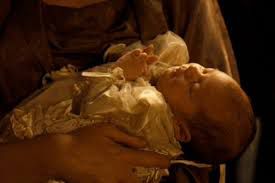
There are other ways Dhurandhar 2 is reminiscent of Coppola’s pair of classics. Hamza’s insistence on not dealing with drugs echoes Vito’s, while a late film flurry of killings is reminiscent of The Godfather’s famous baptism scene, with Rizwan serving in the Al Neri role. All the eye mutilations too remind of Mo Greene’s execution, bullet through glass through eye.
What Dhar can’t replicate though is the seamless storytelling of Coppola, which means Part II is the equal of the original ( dare I say even supersedes it). Dhar, however, is tied to his ideology and his film suffers from it. I do not mean it in terms of the political stance the film takes but rather the need of the film to keep reminding the viewer of its “truthfulness” and its urgency.
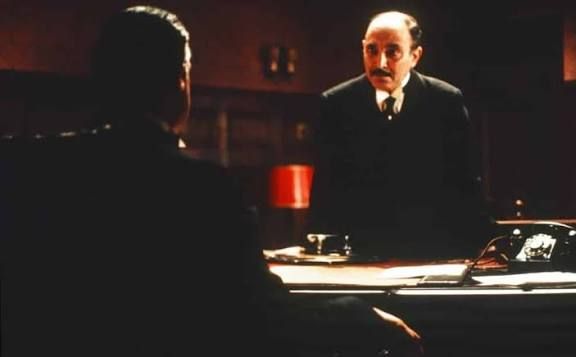
Take for example, the key confrontations between Micheal and Kay in Part II and Hamza and Yalina in Dhurandhar 2. The former is a powerful, harrowing scene with Kay finally standing up to Micheal and Micheal getting angry and raising his voice, a rare occasion where the inner monster that is forming inside is let out. There’s a similar confrontation and confession between Hamza and Yalina, but any underlying tension the scene has evaporates as Hamza starts reeling of names and facts of terrorists and the innocent people killed by them, like in a debrief. It’s awkwardly placed and awkwardly played, like something Vivek Agnihotri might write.
Consequently, Dhurandhar 2 sees a severe drop-off in quality from the first part. After a magnificent beginning, it cannot wrap things up satisfyingly, unlike The Godfather Part II or Gangs of Wasseypur II. All the juicy gang war complexity that made the first part so heart-thumping and heady is absent here. Whereas in the first part much of the intrigue came from Hamza playing off SP Aslam against Rehman Dakait, or intriguing with his father-in-law, in a A Fistful of Dollars type way, this part just finds all the villains huddled together, sitting round a table. Consequently, Hamza seems to do little spying in the film. All problems are solved by just gunning down the problem. And that’s without getting into the fact that this film’s agenda-setting is much more transparent than the first one, which interferes more with the storytelling (and strains credulity many times).
There’s plenty to be enjoyed here, true. The acting is excellent all over the board, with Arjun Rampal, if not reaching Akshaye Khanna level (though it’s not his fault, its the film’s), in a excellent turn and Ranveer Singh being ol’ reliable. Some of the action sequences are nice, Rajat Bedi’s comic relief is welcome, and some of the twists are well-executed (the one at the interval is brilliant). But it all pales in comparison to the first part. There’s no standout villian like Rehman Dakait (Major Iqbal is provided some much needed complexity but, unlike the first part, he seems much more like a pawn), there aren’t many memorable dialogues like “Alam Doodh Soda” or “Kasainuma”, and the soundtrack is a letdown, aside from Ari Ari. While Dhar’s approach to punctuate his action sequences with high-tempo music felt fresh in the first part, here it seems to have run its course. Part of it is because the music itself is not up to the mark. But the problem is also that with so many action sequences, the songs start blending into each other. Some action scenes could also have been allowed to play out silently.
Ah well, at least it is leagues better than the other Godfather clone, Animal, and Ram Gopal Varma’s various Godfather fan fictions over the years.