
So, the New York Times has asked readers to vote for the best films of the 21st century (here) and I voted myself. Here are my picks, along with the alternatives that nearly knocked them out, which is my roundabout way of presenting my top 20.
1. Dogville (dir. Lars Von Trier)
If you ask me what is a film you wish you had made, this is my answer. It is an intoxicating blend of formal rigour, storytelling bravado, bold-faced theme-tackling, and ideological dissonance. As I sat awestruck, I recognized I would never look at film the same way again.

Alternative
Dancer in the Dark (dir. Lars Von Trier)
Von Trier makes variations on the same story, but manges to spruce them up with a different conciet every time. While in Dogville, it was buy-into-this-if-you-can provocation (both in terms of the story and the Brechtian bare soundstage setting), here it is a musical that both plays homage to them and makes fun of them. Björk delivers perhaps the greatest performance ever by a non-actor.
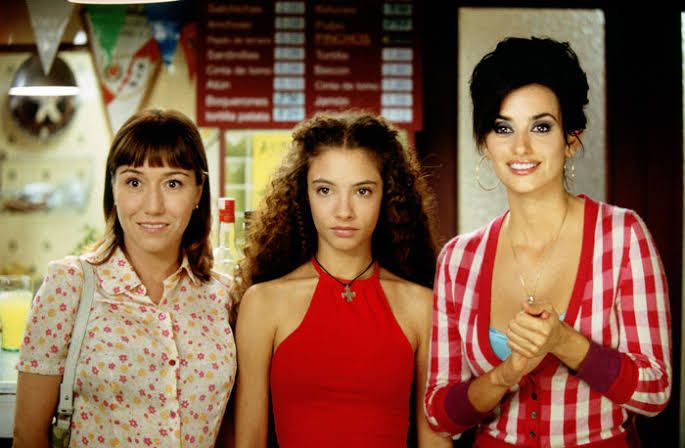
2. Volver (dir. Pedro Almodóvar)
I wrote my first piece of film criticism after watching this film (unreadable). The emotional wringer the film put me through had such an effect that, with a tear in my eye, I grabbed the nearest person I could find and expounded in incoherent terms the impact it had on me. I bit his ear off until he made up an excuse to leave the house. Didn’t matter, I could have talked to the wall about my fasnication with Volver. And I did.
Alternative
The Piano Teacher (dir. Michael Haneke)
It was a tossup for me whether to go with Almodóvar’s best or Haneke’s best of the century. All of the films I have mentioned thus far have been anchored by exceptional lead performances, but perhaps none is equal this century to Isabelle Huppert here. A parade of degradation underpinned by startling vulnerability, a film where the lines between tough love and hate blur and then disappear.
3. Certified Copy (dir. Abbas Kiarostami)
The rare film where your interpretation of it can change from scene to scene. Kiarostami draws you in slowly and before you can know it you are surprisingly lost but fully intrigued.

Alternative
Before Midnight (dir. Richard Linklater)
Another film about a couple bickering, this one more straight-laced than Copy, but no less effective. As much as I would like to see Jesse and Celine return, I think this is a great ending. Open-ended (hey, again a little bit like Copy) and a direct refutation of happily ever after, to me it is the best film in the trilogy. That hotel room scene is still entrenched in my mind.
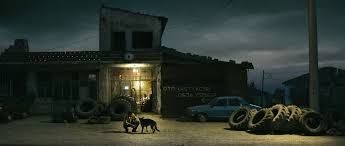
4. Once Upon a Time in Anatolia (dir. Nuri Bilge Ceylan)
Expansive, remorseful, weary, and tense, rare is a film that builds mood like this film does. You could watch this film with the subtitles and audio off and still come away with appreciation. Anatolia’s picturesque cinematography and ruminative ending are hard to shake off.
Alternative
About Dry Grasses (dir. Nuri Bilge Ceylan)
I avoided anything too recent and I do think Anatolia is Ceylan’s best, but Grasses is another hard film to shake off. Instead of a thriller narrative and sprawling cinematography, this film is more talky and enclosed in small spaces but is no less brilliant.
You can find me raving about the film here.
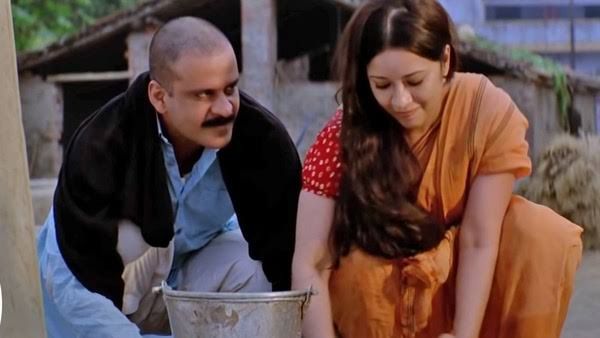
5. Gangs of Wasseypur (dir. Anurag Kashyap)
Hey, gotta have that Indian representation right? I could think of no better representative for Bollywood than Gangs. It combines old-school masala populism with more indie methods, creating a bloody, violent, but still funny and sometimes even tender saga. Malfunctioning gun to my head, I would probably pick Part II if you were to split these into two like for the Indian release. But I am glad it is just one film for international purposes, because both parts are brilliant.
Alternative
Raman Raghav 2.0 (Anurag Kashyap)
Wasseypur is my definite choice, but Kashyap will give you a lot of options. There’s the griminess of Black Friday and Ugly. There’s the elliptical No Smoking. There’s the more classical mastery of Dev D and Gulaal. But the film that stuck in my craw the most is this one. His dirtiest, grimiest, sleaziest, most represhensible film and all the better for it.
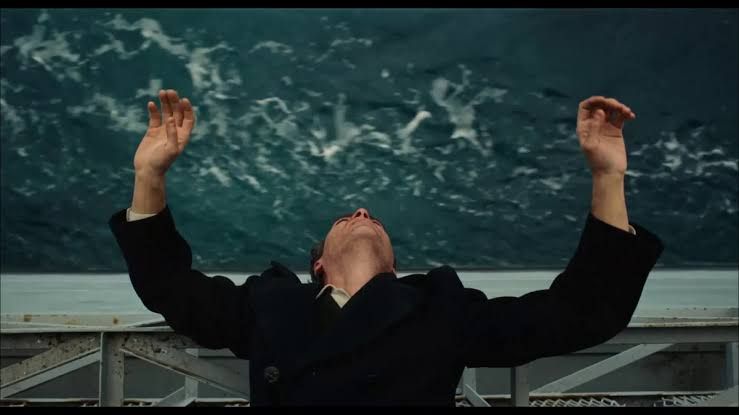
6. The Master (dir. Paul Thomas Anderson)
Featuring two fiery performances from Joaquin Phoenix and Philip Seymour Hoffman, and a quiet but no less ferocious turn from Amy Adams, The Master is a perfect concoction of cinematic brilliance, as heady as any Phoenix in the film itself drums up. Some scenes startle, like the shouting in prison scenes or the initiation scence, while some are just heartbreaking, like the finale.
Alternative
Knight of Cups (dir. Terrence Malick)
The greatest disservice you can do to Terrence Malick’s oeuvre is grouping To the Wonder, Knight, and Song to Song together. They of course share similarities and were shot in the same way, but are so distinct, not only in terms of subject matter but also in terms of quality. Wonder is like a quiet kid, nothing majorly wrong with it but hard to love. Song is like a wild party hosted at an upscale house by usually self-serious people, kinda fun but ultimately a drag. But Knight of Cups? It hits just the sweet spot between funny, profound, ridiculous, heavy, tense, quiet and loud. Among the trilogy, it is the best structured (the tarot cards help) and the best overall of Malick in the 21st century (my hottest take in this list).
7. Embrace of the Serpent (dir. Ciro Guerra)
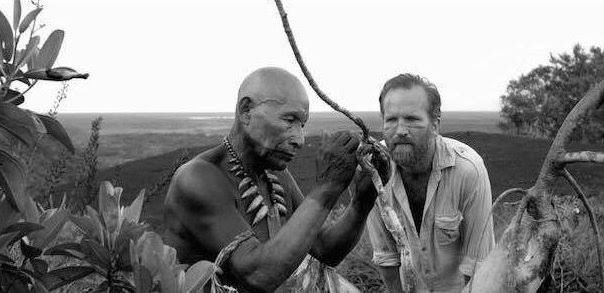
This beguiling film left the audience perplexed at my local film festival (a rare film not to receive a standing ovation) but I was enraptured throughout. It’s in the best mold of Aguirre, the Wrath of God but adds a trippy element, and I am not just talking about the drug-induced psychedelic trip. Along the way it asks pertinent questions not only about colonialism but about the nature of contact itself. The scene where the European Theo thinks science should be withheld from the tribes in South America lest they forget their culture still puts me in a philosophical reverie.
Alternative
Inland Empire (dir. David Lynch)
(Could just as easily have been Mulholland Drive)
Lynch’s trippy, envelope-pushing, balls-out, meta, digital epic is a dazzling experience. It’s a drug trip gone wrong and oh, so right at the same time. It’s a smorgasbord of horror, comedy, road film, mob thriller, Hollywood inside baseball, and God knows what else. It feels like something you’d dream up after eating a plate of Garmonbozia. And it’s a trip worth taking again and again.
8. The Irishman (dir. Martin Scorsese)
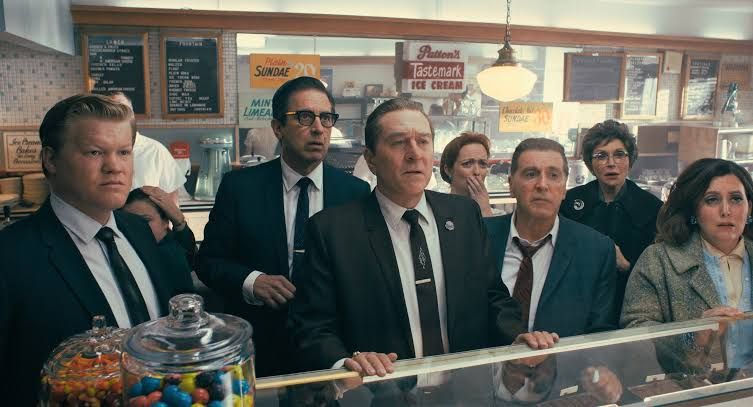
There could have been a complacency, both on the part of Scorsese and on the part of the viewers. Scorsese could have coasted on his name and replayed the old hits. The viewers could have lapped it up and basked in the glow of nostalgia. Instead, Scorsese does it again and delivers once again one of the finest mob films ever, no small feat considering how packed the genre is with them. This is a film that recalls the Godfather trilogy, Once Upon a Time in America, and obviously, Scorsese’s own mafia films, but it still stands steadfastly out as its own thing. By showing the mobsters as failed fathers, old diabetics, and old jailmates, it de-romanticises them thoroughly.
Alternative
The Wolf of Wall Street (dir. Martin Scorsese)
WOWS ignited a whole host of responses upon its release, with some accusing it of glamourising the vapid lifestyle of Jordan Belfort, while another equally strong contingent argued for its satirical qualities. However, the experience of watching this film does not happen along these lines for me. It’s a film so uproariously funny that I no longer give a damn whether I am laughing with or at them. After the film is over though? Well, of course the satire is obvious and only someone unfamiliar with watching a film before would think Scorsese is putting these people on a pedestal. Which is a lot of people apparently.
9. The Disciple (dir. Chaitanya Tamhane)
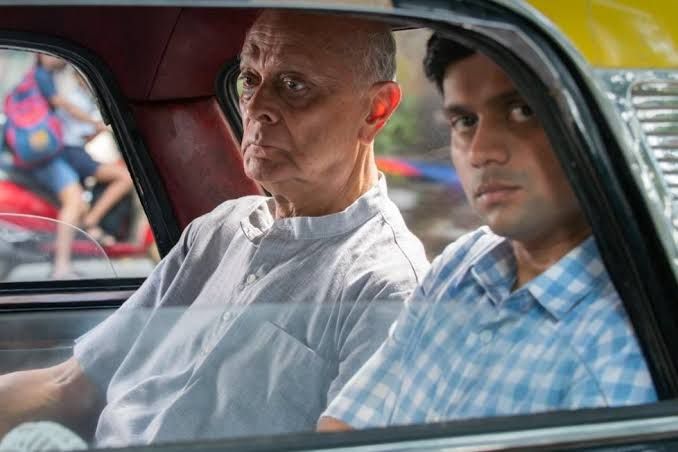
In storytelling, more often than not the focus is on the extraordinary, starting from The Epic of Gilgamesh itself. The Disciple is extraordinary however not because it focuses on the special, but because it focuses on the ordinary. Sharad is an ordinary man with somewhat of a talent in Indian classical music but it’s not of a nature that would carry him to glory. He has ordinary faults, sexual urges, need for companionship, money, and the need for recognition. He is a man who is jealous both of a popular singer on a reality show and a man who sings on trains for money. Unflinchingly relatable for anyone who has loved something which has not loved them back.
Alternative
I’m Thinking of Ending Things (dir. Charlie Kaufman)
Here’s another film about a man with a grandeur fantasy but of uncertain means to reach it. But is it really about him at all? Or is it about her, the one who is going to end things? The vagueness of the film is a strength because its individual scenes are so strong they can have their own little interpretations by themselves. Who knew a piece of Pauline Kael film criticism could be compelling cinema?
10. Decision to Leave (dir. Park Chan-wook)
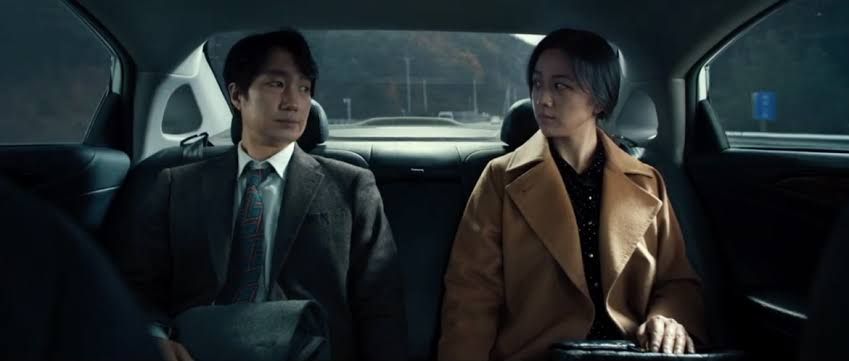
I first watched this film at home and knew I had to experience it on the big screen, which I did and it was glorious. Like the best thrillers, it is not the plot mechanics that impart the film its importance but the general mood established. Park directs with such a deft hand that you are gripped throughout, even while the neo-noir trappings suggest there is no happy ending in sight.
Alternative
Burning (dir. Lee Chang-dong)
Another off-kilter Korean thriller, Burning stays true to its name. The slow burn allows all of the protagonist’s anxieties and maybe delusions to come to the fore. It also allows the film to show off its impressive cinematography and the centerpiece of the film, where Hae-mi dances is an achingly beautiful scene. I was unsure about my response to the film but this scene converted me into an adherent and I was grippedthroughout the rest of the film.
Final Thoughts
- I am satisfied with the breadth of my selections, covering four continents and when you consider the nationalities of the directors, nine countries.
- I am sure I just haven’t watched enough films from Africa and Australia.
- No women directors unfortunately but Céline Sciamma’s Petite Maman came close. Her Portrait of a Lady on Fire is worth a mention too.
- I hesitated with Shuchi Talati’s Girls Will Be Girls due to its recency but it’s another fine mention.
- No animated films either but some that came close included Waking Life, Spirited Away, Up, The Wind Rises, The Tale of the Princess Kaguya, and The Boy and the Heron.
- Really I have already stretched the 10 film limit to 20 and a lot of mentions so I could have done a top 20, 50, 100, or even a 200 happily.
 Alvel's blog