Warfare
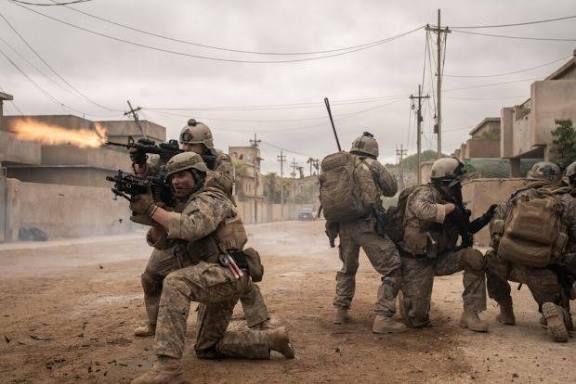
I’ll admit upfront that I am not a fan of Alex Garland’s films, whether he be a writer or director. The fact that he was only co-directing this one didn’t mean much beforehand because, as I said I don’t even vibe with films he only serves as a writer.
However, it seems co-director Ray Mendoza may have had more of an influence than I thought. He was involved in the conflict depicted in the film and has put forward a very authentic-looking film.
From interviews, it seems that Garland could have only handled the technical aspects. Regardless, this is my long-winded way to say I thought Warfare was much better than I anticipated it to be.
Much of that is due to the film’s exceptional first 45 minutes or so. The tension builds and builds, with the lack of score making the imminent threat even more menacing. The soldiers (played by D’Pharaoh Woon-A-Tai, Will Poulter, and others in an ensemble cast where star power or name listing is no guarantee you necessarily have a meaty part) try to keep a normal facade, but when one of the gunners misses his shot to take down his counterpart, the stakes are raised higher.
This anticipatory opening act is the film’s high point. Once the warfare actually starts, it is engaging enough but it’s not anything we haven’t seen before. It is better than dreck like Michael Bay’s Benghazi film for sure, but it doesn’t improve on works like Black Hawk Down and doesn’t approach the level of masterful like The Hurt Locker.
This is without even going into the politics of the film. The makers and some of its defenders will say it doesn’t have any. But it seeps through whether or not a film’s makers intended it or not, especially if it’s a war film. Early in the film, the troopers take over a Iraqi home where two families live and that’s where most of the film’s action happens. In the process, the home is destroyed, the families are traumatised (including children), and two Iraqi translators who are helping the US army are killed. And yet, the film barely spares a thought for them. Even the extensive end credits, where the real life counterparts of the actors are shown, is bereft of them.
The filmmakers have strived to corroborate the actions in the film from at least two sources and Mendoza says he made the film as a tribute/recap for Elliot Miller (who has no memory of the events). Even with these caveats however, the way the film disregards its Iraqi characters smacks of American exceptionalism. In a way, the film suggests Iraqi lives are less worthy to be remembered or mourned.
Still, the film’s remarkable opening waiting sequence (and that perfectly lit fuse that kicks up the film’s action) are reason enough for it to be counted among the better military-focused films from Hollywood recently.
Train Dreams
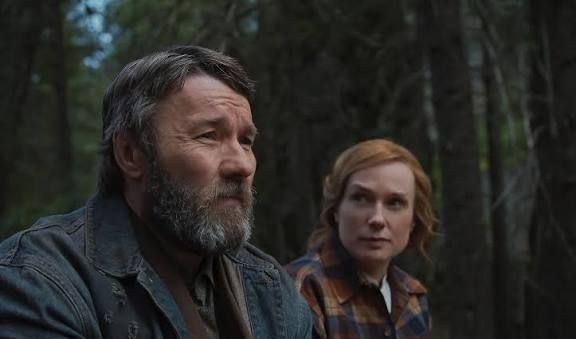
Terse and elegiac and profound, Train Dreams sweeps through it’s narrative with a grace that has seen it earn comparisons to Terrence Malick. It follows Robert Grainier (Joel Edgerton, quiet, stoic, and winning in his restraint), the archetype of the worker, sawing logs for a living. As the voiceover informs he does not see the coast in his life and his life is not of the typically extraordinary kind that is so often the focus of films. But this film is proof that any story and any life can be be grounds for scintillating cinema.
Having said that, the film does take a while to find its footing. I especially take umbrage with the way one of Grainier’s coworkers (who is Chinese) is dealt off with. While the surprise is part of the equation (it is never clear why the white men do what they do), in a film with such understated camerawork, the way it is shot is brazen. It’s one of the only moments in the film where Grainier drops his calm demeanour and it is a somewhat grating experience. Couple that with a few hurried sequences (especially the initial stages of his romance with his wife, played by Felicity Jones) and I felt the film had got off on the wrong footing.
All of these problems are dispersed with the arrival of Arn Peeples, played by William H. Macy with an eccentricity that is quickly endearing. However, he is also a character wise in his own ways, and serves as an unlikely companion to Grainier. He inserts a much-needed dose of humour and pathos and from this point on, the film is a smooth ride. Even the narration quality picks up around this time.
Train Dreams contains many stellar scenes and sequences. There’s the scene where a fellow logger is killed by a person who calmly asks where he can find him and just as calmly executes him, in an act of revenge. He then, in a priest at a wedding tone, asks if anyone has objections to what he did and if not it would be the last they see of him. Nobody does, because these logging units are inherently passive, but also because they understand the motivation for the revenge and it fits in the informal code that men design for themselves.
There’s moving scenes of men who have died being marked on trees so that they are not forgotten. The closing stages are some of the film’s best, reflecting on a life that has its share of tragedies and regrets, but has also been filled with people who have enriched it. His logging days gone (Grainier is a saw man and cannot operate well the new machinery), he still lives a life of quiet dignity. Towards the end, he takes on a completely new experience. Grainier’s life maybe simple but it is not stagnant.
All of this is aided by magnificent cinematography, perhaps the year’s finest. The forests where Grainier goes to work are beautifully captured. The nighttime scenes, lit by campfire and lamps, are gorgeous to look at.
We are informed near the end of the film that one of the train tracks, worked on by Grainier, is no longer in use and has been surpassed by a different one. Still, in its time it transported and stored, thousands, if not millions, of people’s dreams and hopes. It may be a relic of the past, but in its own way it shaped the America of today.
In a similar way, men like Grainier shape the world in their own way, however small thier contribution. Train Dreams is an elegy to the humble man.
 Alvel's blog